Bunker: Zombie Survival Games
Go DreamsAdventure
4.32.04K Reviews
- Version
- 5.3.0
- Installs
- 5.00M
- Age Rating
- Everyone 10+
Screenshots
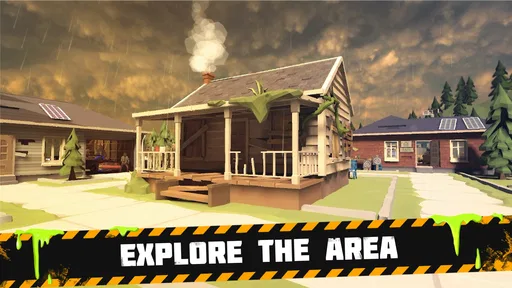
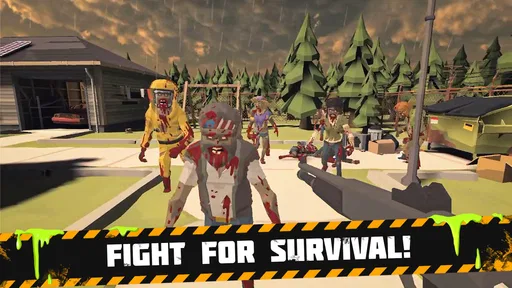
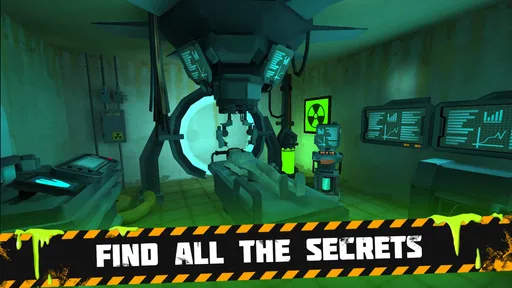
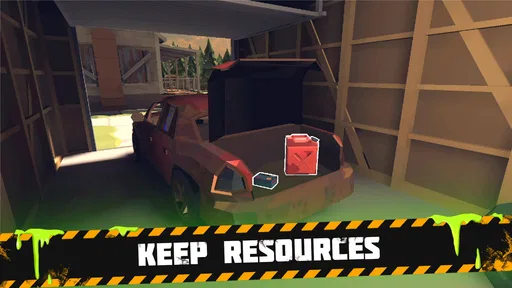
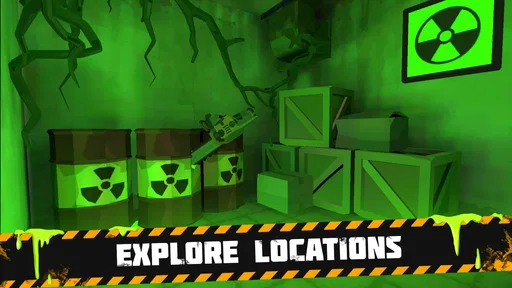
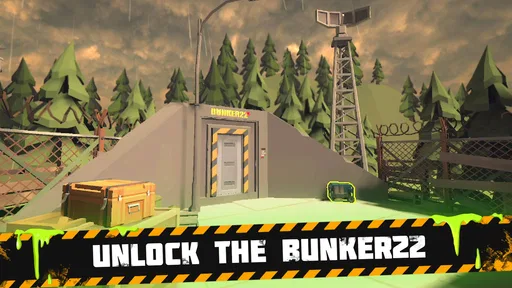
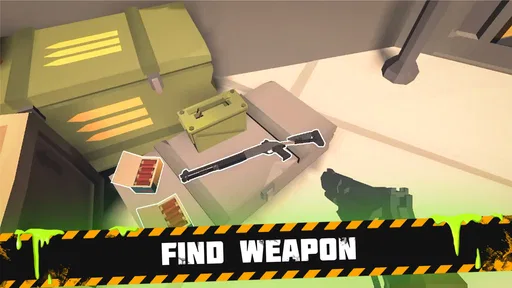
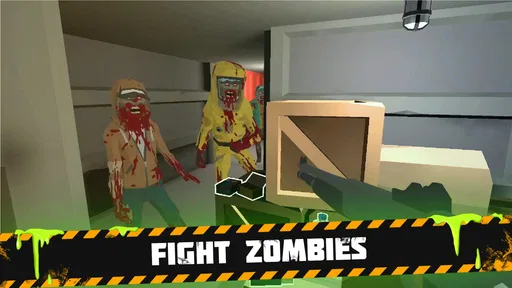
Our Review of Bunker: Zombie Survival Games
 Analysis by Appyee
Bunker: Zombie Survival Games caught my attention because it aims for a tense, enclosed survival adventure rather than a bright, action-heavy zombie game. I spent time with it as a mobile adventure title and found that its strongest quality is atmosphere: the bunker setting makes every room feel like part of a larger mystery, while the post-apocalyptic theme gives ordinary exploration a constant sense of risk. It is free to play, developed by Go Dreams, and its audience is already substantial, with over five million installs and an average rating of 4.3 from around ninety-five thousand ratings.
That popularity makes sense during the first few sessions. The game gives me a clear reason to keep moving through its shelter-like environment, checking spaces, looking for useful objects, and trying to understand what happened around me. It is not simply a shooting gallery with zombies placed between objectives. The appeal comes from combining exploration, survival pressure, and a stalker-like mood in three-dimensional surroundings.
My more important question, though, was whether the experience would still feel worthwhile after the initial curiosity disappeared. Atmospheric survival games can make an excellent first impression and then become repetitive once the player understands their basic rhythm. In this case, the answer depends heavily on what you want from mobile adventure games. If you enjoy gradual discovery and uneasy environments, it can earn a regular place on your phone. If you need constant mechanical variety or a fast stream of new challenges, the same confined design may begin to feel restrictive.
What the first week feels like
The opening appeal comes from the setting. A bunker naturally creates tension because it limits visibility and makes every corridor feel meaningful. Instead of wandering through a huge open world with distractions everywhere, I felt encouraged to pay attention to the immediate surroundings. That focus works well on a phone, where a compact session is often more practical than a sprawling adventure that demands a long uninterrupted play period.
The post-apocalyptic presentation also gives the exploration a useful emotional layer. Rooms are not just containers for objectives; they suggest that people lived, worked, and struggled there before the player arrived. The combination of abandoned shelter imagery and zombie-survival themes creates a mood that is more unsettling than cheerful. I would not describe it as a relaxing game, but it is effective when I want something atmospheric during a short evening session.
One practical strength is that the game is easy to understand as an adventure experience. I do not need to learn a complicated competitive meta before enjoying it. The basic motivation is direct: explore, survive, investigate, and continue deeper into the situation. That makes it approachable for someone who likes survival themes but does not want the demanding management found in more elaborate survival sandboxes.
At the same time, I would not mistake accessibility for simplicity without limits. The tension depends on the player accepting a slower pace and allowing the environment to do some of the work. Someone who rushes through every area may miss the reason the bunker is interesting. I got more from it when I treated each section as a small investigation rather than trying to clear it as quickly as possible.
A useful first-week habit is to pause before moving on whenever the game gives me a new area to inspect. I found that checking the surroundings carefully is more rewarding than following the most obvious route immediately. This is not merely a completionist trick. In a game built around a closed shelter, the layout itself carries much of the storytelling, so rushing can flatten the experience.
The free entry point is another reason it is easy to try. There is no purchase required to begin, and the age rating is Everyone 10+, which places it within reach of a broad audience while still signaling that its survival and zombie themes are not aimed at very young children. The in-app purchase range runs from a few cents to $19.99 per item, so I would approach spending cautiously and first decide whether the core loop genuinely suits me.
For a realistic everyday scenario, imagine having twenty minutes before bed or during a commute with enough battery and a stable opportunity to concentrate. This is where the game makes sense: I can enter the bunker, explore a focused section, and stop without needing to maintain a large settlement or coordinate with other players. It gives that time a clear mood and purpose. The trade-off is that the suspense may be less effective if I am constantly interrupted, because its atmosphere works best when I can observe rather than tap through in a hurry.
How it compares with familiar alternatives
Compared with a traditional action game, this adventure is more dependent on tension and setting than on nonstop combat. Compared with a large survival sandbox, it feels more directed and less like a second job. That difference is important. A sandbox may offer more freedom, crafting depth, or long-term construction, but it can also demand more time and repeated resource gathering. This title is better suited to players who want a defined post-apocalyptic journey rather than an endlessly expanding personal base.
It also differs from lightweight puzzle adventures because the zombie-survival framing changes how I read the environment. I am not only asking what object solves the next obstacle; I am also considering whether the space feels safe and what may be waiting beyond it. That extra layer gives the game personality, even when the underlying interaction is familiar.
On the other hand, players who prefer polished, high-speed combat may find the bunker’s measured rhythm too restrained. The game’s identity is tied to atmosphere, so replacing that with constant action would undermine what makes it distinctive. I would choose a more combat-focused alternative if my main goal were quick reflex challenges rather than exploration under pressure.
Whether it keeps its value after the novelty
I judge a mobile adventure’s staying power less by whether it can fill every day and more by whether I still have a reason to return once its central setting feels familiar. Here, the useful test is to notice whether the bunker’s atmosphere continues to make exploration enjoyable, rather than expecting each visit to deliver a completely different kind of game. That distinction helps clarify what kind of value this experience can offer over time.
The month-to-month question
After the first wave of curiosity, the game’s recurring value comes from how much I enjoy its mood and structured exploration. It is not the sort of app I would automatically open every day simply because it has become part of a routine. Its long-term appeal is more selective: I return when I want a contained survival atmosphere, a mystery to work through, or a darker change of pace from casual mobile games.
That can still be valuable. Not every game needs daily rewards, competitive rankings, or an endless progression ladder to justify staying installed. For me, a focused adventure earns space when its setting remains memorable and its sessions feel distinct enough from ordinary phone entertainment. The bunker has a clear identity, which is more useful over time than a generic zombie theme pasted onto unrelated mechanics.
However, the same focus creates a ceiling. Once I understand the main pattern of moving through enclosed areas, inspecting what matters, and dealing with threats, the surprise naturally decreases. The game can remain enjoyable, but it becomes less about discovery and more about revisiting a known style of play. That is not a flaw for everyone; it simply means the title is better as a recurring adventure than as an always-on lifestyle game.
Players deciding whether to keep it installed should ask themselves a simple question: do I want a game I can revisit for atmosphere, or do I need a system that continually produces new goals? If the answer is atmosphere, it has a reasonable chance of lasting. If the answer is constant novelty, the initial bunker mystery may not be enough by itself.
The current version is 5.3.0, and the game supports devices running Android 8.0 or later. That makes it accessible to many Android users, although the actual comfort of play will still depend on the individual device and how well it handles a three-dimensional environment. I would leave some storage and battery headroom rather than assuming that an older phone will deliver the same smooth experience as a newer one.
Small choices that improve the experience
My first tip is to play with a deliberate pace. Treating the bunker as a place to read rather than merely cross makes the environmental design more useful. I also recommend separating short sessions by objective: one session for exploring a new section, another for revisiting an area when I understand the situation better. That approach reduces the feeling of wandering without purpose.
My second tip is to avoid spending immediately. Because optional items can cost as little as $0.05 or as much as $19.99, the sensible approach is to learn the game’s natural rhythm before deciding whether any purchase improves it. A low-cost item can still encourage unnecessary spending if I buy repeatedly without gaining a clearer reason to continue. I would only spend after confirming that the game has become a regular part of my play time.
My third tip is to use it as a mood-specific game rather than forcing it into every spare moment. It works best when I want suspense and focused exploration. Opening it while distracted, tired, or looking for a quick burst of action can make the same deliberate design feel slow. Matching the game to the right moment is a surprisingly important part of getting value from it.
Maintenance, friction, and reasons to stop
The maintenance burden is relatively low compared with survival games built around permanent bases, long crafting chains, or social obligations. I do not need to treat the game like a daily responsibility to understand its appeal. That is a genuine advantage for people who want a self-contained adventure on a phone rather than another calendar of tasks.
Still, there are forms of friction. The enclosed setting can begin to feel visually and structurally repetitive if I play for long stretches. A bunker is excellent for claustrophobia, but claustrophobia can become monotony when the player wants broader scenery. The same atmosphere that creates tension during the first sessions may eventually make the world feel less varied than an outdoor post-apocalyptic game.
Another possible source of fatigue is the balance between suspense and repetition. Once I recognize how the game communicates danger and progress, some uncertainty fades. I may still enjoy the journey, but I am no longer reacting to every room with the same curiosity. This is where shorter sessions help. Long marathons expose the limits of a focused mobile adventure much faster than occasional play.
The purchase structure can also affect the feeling of comfort. Even when I do not buy anything, knowing that optional items range up to $19.99 means I prefer to establish a personal spending boundary before playing. The free price makes trying the game easy, but free entry does not automatically mean unlimited value. I judge it by the amount of enjoyable exploration I get without feeling pushed toward a purchase.
I would also skip it if I primarily want multiplayer competition, a deep construction simulator, or a huge world that can be explored indefinitely. This is not the right choice for someone who measures value by hundreds of hours of evolving systems. I would choose a broader survival sandbox for that purpose, accepting its heavier time commitment in exchange for more freedom.
Who is most likely to keep it installed?
I think it suits players who like zombie fiction, enclosed mysteries, and adventure games that create pressure through surroundings rather than sheer speed. It is also a good fit for someone moving from casual games toward darker themes but who does not want to begin with a complicated survival simulation. The free price makes that experiment low-risk, while the Everyone 10+ rating gives families a useful indication of its intended age range.
It is less suitable for very young children despite that rating, simply because the post-apocalyptic and zombie atmosphere may not be comfortable for every child. Parents should also remember that optional purchases are present. For adults and older players, the more relevant issue is whether the tone feels engaging rather than repetitive after the opening sessions.
Go Dreams has given the game a recognizable identity instead of making it another interchangeable zombie title. That identity is both its strongest asset and its main limitation. I remember the bunker setting more readily than I remember many generic mobile survival environments, but I also notice the boundaries of that setting sooner than I would in a game built around several contrasting regions.
My long-term verdict
After the novelty fades, I would keep this game installed if I wanted a compact atmospheric adventure to revisit occasionally. I would not make it my only mobile game, and I would not recommend it to someone seeking endless progression or constant mechanical surprise. Its lasting value comes from the combination of a clear setting, approachable survival-adventure structure, and sessions that can fit into ordinary free time without demanding a permanent commitment.
The rating of 4.3 from around ninety-five thousand ratings and the audience of more than five million installs suggest that the concept has connected with many players, but those figures are not a substitute for matching the game to your habits. My own recommendation is conditional but positive: try it for the bunker atmosphere, play slowly enough to notice the environment, and wait before buying anything. If the mood still appeals after several sessions, it can earn a place in a rotation of mobile adventures.
My bottom line is simple: this is a worthwhile free adventure for players who value tension, exploration, and a contained post-apocalyptic world more than endless content. It earns lasting space through mood rather than maintenance-heavy systems. When I want a focused survival story with a darker edge, I can see myself returning to it. When I want speed, variety, or a limitless sandbox, I would choose something else.
Verdict
Strengths of Bunker: Zombie Survival Games
- Intense survival gameplay with constant zombie pressure
- Wide variety of weapons and equipment to collect
- Base-building adds strategy beyond simple combat
- Offline play makes it convenient for travel or limited data
- Dark atmosphere and sound effects create strong tension
Limitations of Bunker: Zombie Survival Games
- Progress can feel slow without frequent resource gathering
- Some upgrades may require significant time or repeated missions
- Controls can feel cramped on smaller phone screens
- Enemy difficulty may spike unexpectedly in later areas
- Limited story depth may disappoint players seeking rich narratives
Other Releases by Go Dreams
View All
Elemental Monsters: Merge
Strategy4.8

Drone App: Forecast for UAV
Weather4.3

Cellular Tower - Signal Finder
Maps & Navigation4.4
Similar Picks in This Category
View All
Roblox
Roblox Corporation4.2

Pokémon GO
Niantic, Inc.3.5

Ninja warrior: legend of adven
TOH Games4.6

Ninja Arashi
Black Panther4.6

Eyes - The Horror Game
Fearless Games sp. j.4.5

Critical Action:Gun Strike Ops
FPS Shooter & Action Game4.3
Frequently Asked Questions
What is Bunker: Zombie Survival Games about?
Bunker: Zombie Survival Games is a survival-focused zombie adventure in which you explore dangerous environments, search for useful supplies, and try to stay alive while facing undead enemies and other threats. The game generally combines exploration, resource management, combat, and decision-making. Progress depends on understanding the surroundings, conserving equipment, and improving your survival strategy rather than simply defeating every enemy you encounter.
Can I play Bunker: Zombie Survival Games offline?
Whether the game works fully offline can depend on the version installed, device permissions, and any online features included by the developer. The main survival experience may be accessible without a permanent connection, but advertisements, cloud saves, updates, purchases, or certain events can require internet access. It is best to launch the game once while connected and check its in-game requirements before relying on it during travel.
Is Bunker: Zombie Survival Games free to download and play?
The game can usually be downloaded without an upfront purchase, but free access does not always mean that every item or feature is available at no cost. Depending on the platform version, you may encounter advertising, optional in-app purchases, energy or resource systems, or paid upgrades. Review the store listing and purchase settings carefully, especially if children will be using the device.
What devices are compatible with Bunker: Zombie Survival Games?
Compatibility varies between Android and iOS releases and may change as the game receives updates. A device with a reasonably recent operating system, sufficient storage, and stable performance is recommended because zombie survival games can use considerable processing power. Before downloading, check the official store page for the required Android or iOS version, available storage, and any listed device restrictions.
Does Bunker: Zombie Survival Games contain scary content or violence?
Yes, players should expect zombie-themed danger, combat, frightening environments, and potentially disturbing imagery. The intensity can vary according to the game’s visual style, sound effects, and story presentation, but it is not designed as a completely family-friendly experience. Parents should check the platform age rating and review the game themselves before allowing younger players to download or play it.
Play our best games!


